Why should you eat less tomatoes? 🍅
Average inflation does not tell the full story
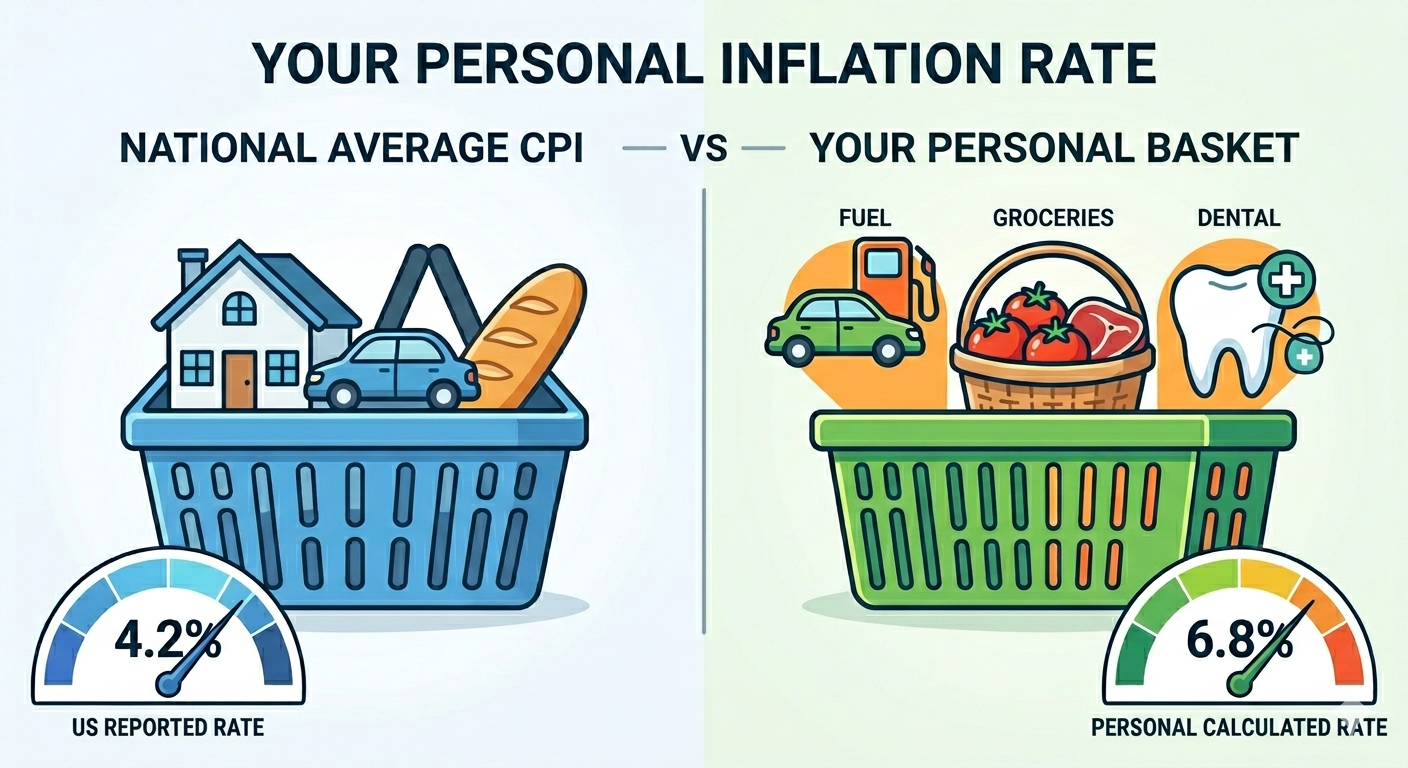
The US recently reported an updated 12-month rolling inflation rate of 4.2%. But here is the thing that triggers my “economic brain”:
You won’t find a single person who actually experienced a 4.2% inflation rate.
When you hear the word “inflation,” it shouldn’t scare you. A little inflation is actually a sign of a functioning economy. We measure it by dropping a variety of goods and services into a metaphorical basket and tracking how the total price changes over time. But not everything in that basket carries the same weight. We don’t distribute our income equally, so the index is weighted by consumer spending:
For example 🏠 Shelter: ~35% of the basket 👕 Apparel: ~2.5% of the basket
Because of this, households experience inflation completely differently based on their diet, commute, living situation, and health.
For instance, the latest CPI report shows gasoline is up around 40%. If you live in a small town with affordable housing but commute two hours a day by car, you will feel that inflation much harder than someone who walks to work.
Weirdly enough, if you regularly eat beef and tomatoes, your grocery bill is inflating faster than average.
Also not all medical costs inflate equally. The price hike you actually experience is usually dictated by the specific healthcare service you need. Even though we like averages, in most cases, they don’t give a full picture for a specific household.
By the way, most banks can probably provide you with more personalized rolling inflation estimates than the government.