What Happens If the US Can No Longer Afford Its Debt?
US cant keep going with the deficit forever
What Happens If the US Can No Longer Afford Its Debt?
If you have been following the news, you probably have come across chaos surrounding the bond market, but this chaos is not really new or unexpected. The US has been under debt pressure for many years, but no debt system can keep growing forever without consequences. You can only feed it for so long. If you find people to lend you more and more money, you can keep the machine running, but the main problem is that as soon as you are not able to find that demand, the whole thing starts to break down.
Quickly, What Are Bonds?
Countries or companies can issue bonds. In short, it is a debt instrument: you buy a bond, give them your money, and they give you back your principal plus interest on it.
When it comes to government bonds, you can have short-term and long-term bonds:
- Short-Term Bonds: The government can borrow your money for 3 months, and after expiration, it will give you back your money and interest.
- Long-Term Bonds: These can be up to 30 years.
If you lend a government your money for 30 years, you would expect a much higher interest rate compared to 3 months. It is not always the case, but most times it is.
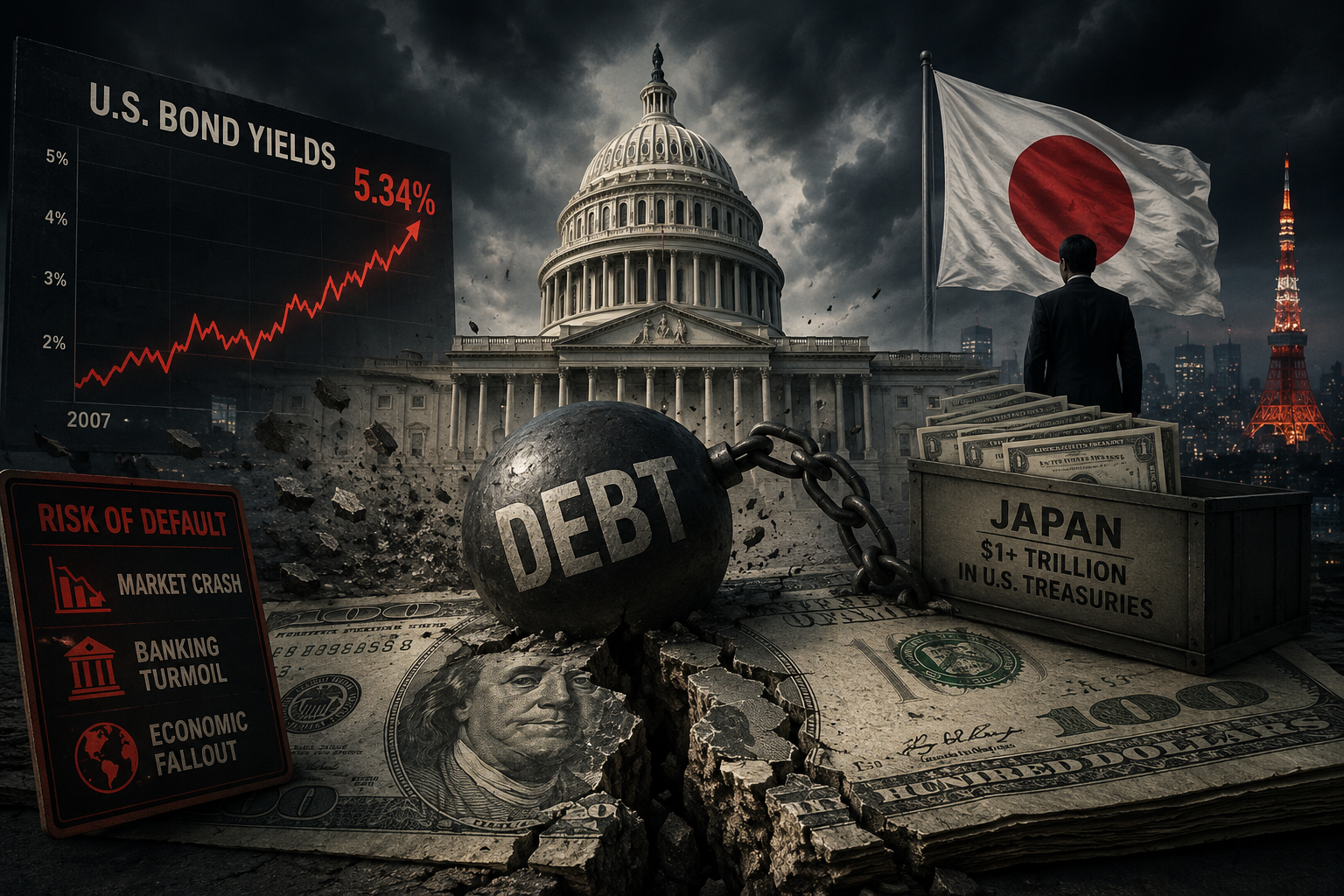
When the 30-year US government bond yield reaches above 5%, it intuitively means the market is demanding much higher compensation for holding long-term US debt. Investors are saying: “Okay, you want me to lend you money for 30 years? You have to pay me a high interest rate to make it worth it.”
One bond market logic you should know: the lower bond prices fall, the higher the yields rise.
The problem with high interest rates is that as old US debt matures, the Treasury has to refinance that debt at prevailing interest rates. The 30-year rate is not the rate paid on all US debt, since the government borrows across many different maturities, but higher rates across the Treasury market gradually increase the government’s interest costs.
With total US debt hovering around $40 trillion, interest payments have become an enormous expense. One thing the US cannot realistically do under the current fiscal system is stop issuing new debt. The government continues borrowing both to finance deficits and to refinance maturing debt. Logically, debt cannot keep growing faster than the economy forever without consequences.
What Does Japan Have to Do with All of This?
Japan is the largest foreign US debt holder, holding over $1 trillion in US Treasuries. Historically, Japanese debt yields were much lower than US yields, which is one reason Japanese investors accumulated so much US debt.
However, with recent momentum and rising yields in the Japanese bond market, Japanese investors may have less incentive to hold US debt. If Japanese investors start to significantly reduce their US holdings, it could put additional upward pressure on US bond yields.
The whole problem connects like this:
- U.S. rates high relative to Japan
- Money attracted toward dollar assets
- Yen weakens
- Japanese imports become expensive
- Inflation pressure builds in Japan
- Japan considers higher rates and intervention
- Japanese bond yields rise
- Japanese bonds become more attractive
- Japanese investors have less reason to own U.S. Treasuries
- Potential upward pressure on U.S. Treasury yields
When dealing with massive debt, the last thing a country wants is persistently high inflation. Inflation can put pressure on yields, pushing borrowing costs even higher.
How Can You Really Solve This Issue Long Term to Avoid Collapse?
- Decrease Government Deficit Spending: Run a country-wide cost-efficiency program to keep debt under control. Starting new conflicts definitely does not support this goal.
- Keep Inflation Under Control: Use every possible measure to stabilize price levels.
- Drive Massive Economic Activity: Achieve massive productivity and growth gains, such as breakthroughs from AI, though at macroeconomic scale, that dividend is not fully there yet.
What Happens If the USA Defaults?
If deficits increase continuously and yields reach extraordinary levels, the risk of default increases. Default means the US government fails to make required payments on its debt.
A government default is very different from personal bankruptcy. It is not like the US goes bankrupt and Japan gets California. There is no collateral tied to Treasury debt.
However, an outright US sovereign default would trigger an extraordinary financial shock:
- Stock Market Shock: Likely immediate and sharp sell-offs across global markets.
- Banking Turmoil: Financial institutions could face severe stress because US Treasuries are deeply embedded throughout the global financial system.
- Economic Fallout: Credit conditions could tighten dramatically, unemployment could rise, and the economic consequences could spread worldwide.