Unemployment 4.3%?
To understand the true health of our economy, we have to look past the headlines and examine broader metrics like the 8.1% U-6 rate.
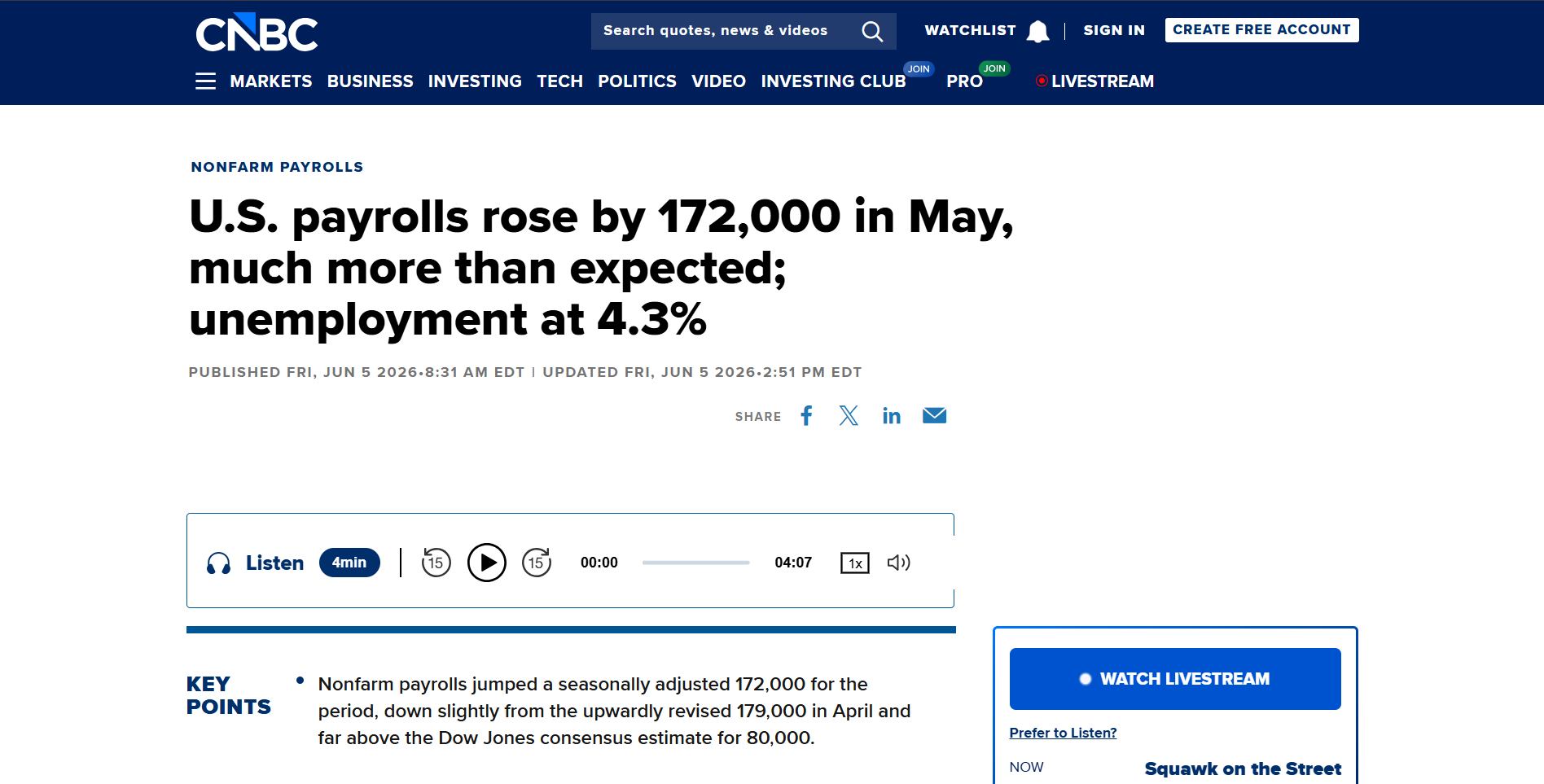
Why the 4.3% Unemployment Rate Is Only Part of the Picture 📉
Every month, unemployment numbers drop, and almost every news outlet zeroes in on the exact same metric. The official unemployment rate is 4.3%.
But if you randomly stopped 100 people on the street, would only four of them be unemployed? Of course not. In reality, the true unemployment rate is likely in the double digits.
Here is why the official number doesn’t tell the whole story:
1️⃣ The “Civilian Labor Force” Catch Before calculating unemployment, the government has to define the labor force. They exclude:
Active-duty members of the U.S. Armed Forces
Institutionalized individuals (prisons, psychiatric facilities, nursing homes)
Retirees and full-time students who aren’t working
Stay-at-home parents not seeking outside employment
Crucially: Discouraged workers. If you haven’t actively looked for work in the past four weeks, you are officially excluded from the main statistic.
2️⃣ The Measurement Blind Spot
Unemployment is measured via actual interviews with a well-distributed sample of roughly 60,000 households. While statistically sound, being selected requires having an official home address. This raises a massive question: How well are homeless populations represented in these statistics?
3️⃣ The U-6 Reality Check
Many argue, including me, that ignoring discouraged workers paints a really optimistic picture. The government actually recognizes this, which is why they publish a broader metric: the U-6 unemployment rate. The U-6 includes people discouraged within the past 12 months, plus underemployed workers. Not surprisingly, the recent U-6 rate hit 8.1%, nearly double the official 4.3% rate.
But there is still a catch. If you have been discouraged for more than a year, you drop out of the U-6 measure. This means a significant portion of the long-term unemployed are erased even from the broadest official metric.
💡 A wild thought to end on: Maybe we should start counting AI agents in the workforce. Since they are technically “working,” they could finally push our unemployment numbers close to 0%. 😉