The Problem With Gold Reserves
Stop buying gold
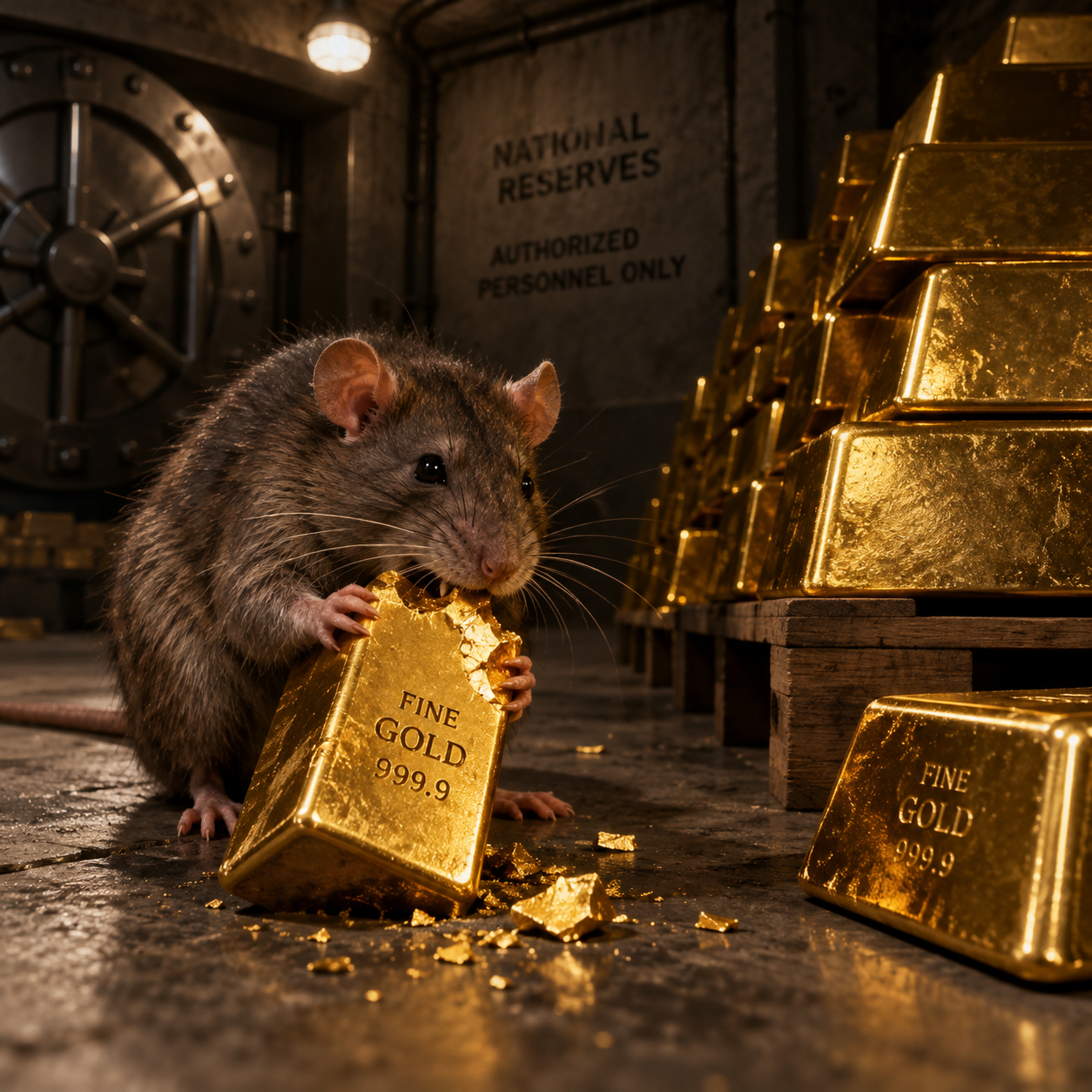
Even though we abandoned the gold standard more than 50 years ago, gold still remains a very important and stable commodity.
What was the gold standard, shortly?
Under a gold standard, money was essentially tied to gold at a fixed rate. Basically, even though you were carrying a banknote, the value of that banknote was connected to gold. Under different versions of the system, gold could be exchanged for currency at a fixed rate.
After the 1970s, the gold standard was abolished and the dollar became a fiat currency. Not only the dollar, but basically all major currencies today are fiat currencies. Fiat means the government and central bank have control over the money supply without having to back every unit of currency with gold.
But since then, we have seen gold hitting all-time highs at pretty bizarre prices.
The reason why I think it is bizarre is that gold essentially has limited practical utility. A large amount of gold demand comes from jewellery and investment, while industrial and technological use is relatively small. We do have gold in chips and stuff, but technology represents only a small part of total gold demand.
It is not the most useful metal. The main characteristic it really has is that it is rare.
Not too rare, though. It is not the rarest. It just has the right amount of rarity. There are much rarer metals on Earth. Gold is available enough that people can own it, but the supply is limited and we cannot simply find it everywhere.
So why do we see these massive hikes in the gold price if it does not have really big practical utility?
Did people suddenly become addicted to jewellery?
The answer is no.
A significant part of the demand in recent years has come from central banks and investors. Central banks have been purchasing massive amounts of gold, contributing to demand and supporting prices.
But now another question: if countries are so confident in their currencies, why would they purchase some metal that has relatively low practical utility?
It is not like building up oil reserves in case of war or grain reserves in case of shortages so people do not starve.
Governments purchase massive amounts of gold reserves because gold gives them something outside another country’s currency to fall back on. It acts as insurance against inflation, financial crises, geopolitical risk, and problems with other reserve assets.
Why Does the US Still Hold So Much Gold?
It is not hard to guess that the USA holds the highest amount of gold reserves in the world. To be honest, its current reserves are almost the same as they were in 1980.
Why have they kept the gold?
One way to look at the strategy is as insurance. Let’s say the dollar is devalued so much that confidence in it collapses. The US would still have a massive internationally recognized reserve asset.
Let’s say suddenly the US is on the verge of bankruptcy and needs to buy time. Gold gives the country an additional reserve asset that is not somebody else’s liability.
If there is a war, the same logic applies. Financial assets held abroad can potentially be frozen, while physical gold stored domestically is much harder for another government to interfere with.
The USA also holds some gold belonging to other countries in its vaults. With increasing geopolitical and financial uncertainty, some countries have moved portions of their gold back home. The Netherlands, for example, repatriated part of its gold from New York.
Probably more nations will think about doing the same thing, just to be safe.
The Problem With Gold
What is the problem with gold?
It is heavy, hard to transport, and it still needs to be exchanged into some kind of currency for everyday use. You cannot normally go to a store and buy stuff with a gold bar.
Gold is ancient.
So what do you think, guys? If tomorrow the USD collapses, is the world going to fall back on gold or cryptocurrencies?
To me, it is a no-brainer. People could potentially prefer digital assets because, like gold, some cryptocurrencies have limited supply, but they are way more liquid and can be deployed around the world within minutes.
The safety question comes now.
Okay, crypto can be hacked or stolen, and people may not trust it in the same way they trust gold.
But slowly, without noticing, the crypto market has become enormous. Today, without any major government really adopting cryptocurrency as its main monetary tool, the total crypto market already has a market capitalization of well over $2 trillion.
Maybe we should have digital asset reserves because we are not going back to caveman times.
And to all the countries and central banks that are now purchasing and stacking up their gold reserves: build schools, roads, and invest in infrastructure.
Maybe that will benefit the economy more than those shiny bars locked somewhere in a basement where only rats can get to them.