The Problem With ETFs That Is Not Really a Problem
Only thing you need to know in investing
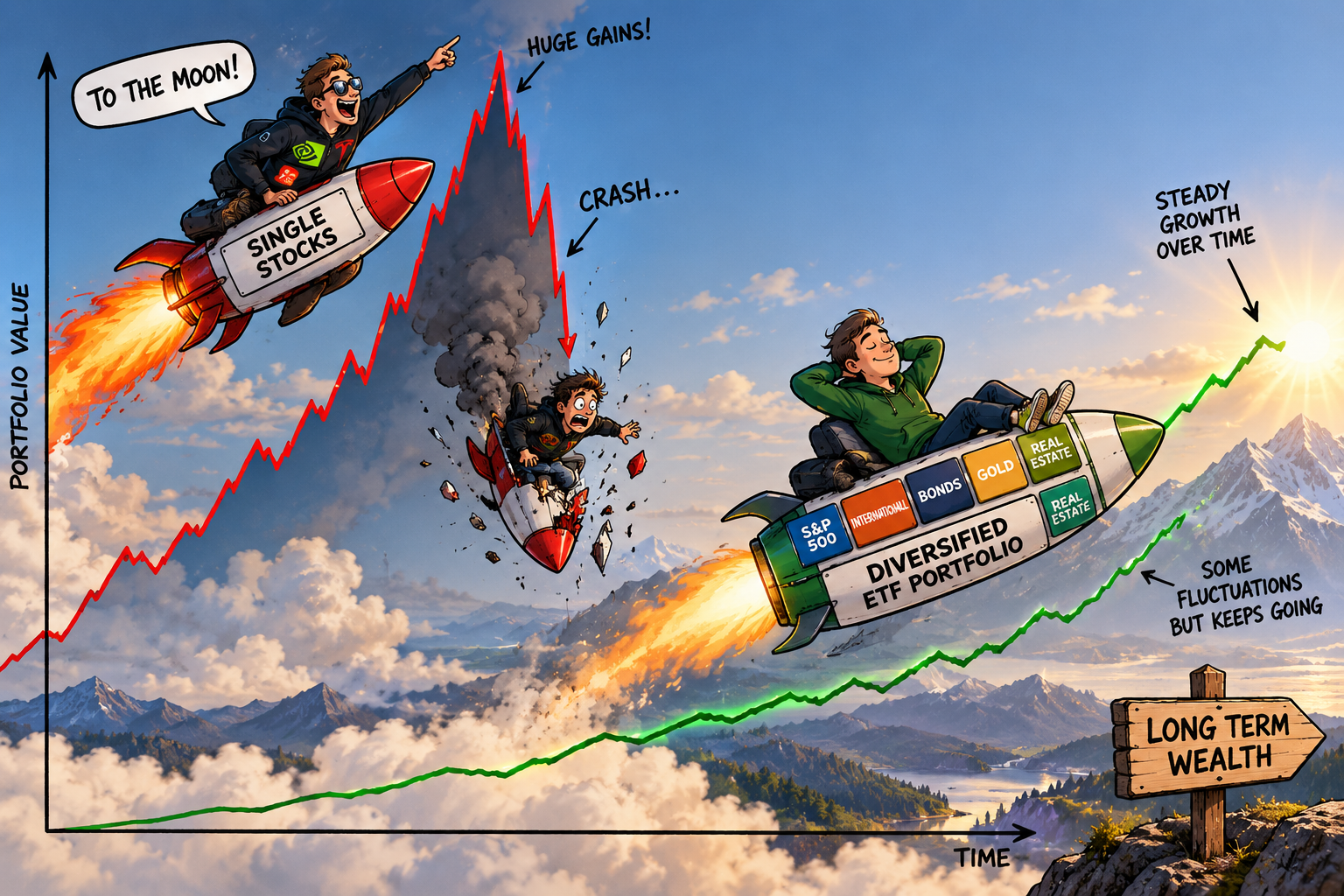
I am one of those guys who is a big believer in diversifying a portfolio. Historically, it has been a very safe way to invest, especially for people who don’t really have a lot to invest, including myself.
Currently, I cannot afford to take a $100k or million-dollar position in a single stock, so in order for me to truly diversify my portfolio, I usually own ETFs instead of single stocks.
What Are ETFs?
Not to get into too much detail, imagine multiple stocks bundled together and sold under one stock. In some cases, an ETF follows a simple tracker like the S&P 500.
So an investment company buys the stocks in the S&P 500, packages them under one ETF, and you can simply go and buy that. In a nutshell, you basically own parts of 500 companies.
There is one downside. Usually, in most ETFs, the weights of the companies are not equally distributed. You are still a lot better off than just owning a single company, but the performance can still be very much controlled by a few players in the market.
For example, let’s go back to the S&P 500. A large part of S&P 500-tracking ETFs is distributed among the biggest companies, such as NVIDIA, Apple, Microsoft, Amazon, and Alphabet. As you can see, these companies also share an industry characteristic. All of them are very tech-heavy companies.
In fact, as of August 31, 2026, the top 10 companies represented 37.8% of the S&P 500, while the single largest company represented 8.1%. So concentration at the top is definitely real.
In most cases, one of the arguments against index-tracking ETFs is that they are not truly diversified.
I am here to calm you down a bit.
The S&P 500 is weighted by float-adjusted market capitalization. This means that larger companies have larger weights in the index. If, for example, NVIDIA starts to fall behind and AMD becomes the new king of chips, AMD’s weight can increase as its market value grows relative to other companies. The S&P 500 is also rebalanced quarterly, and companies can be added or removed from the index.
So you don’t really have to personally keep changing the companies you own. Most ETFs are actively tracking the index
One worry you might have, which is legitimate, is: what if there is a technology bubble crash tomorrow and those top companies significantly drop in value?
That risk definitely exists. However, if you take a look at the financial statements of many of these companies, they are extremely healthy businesses, some of them sitting on massive amounts of cash with low levels of debt. Growth has also been strong and margins look healthy. Likelihood of them crashing over night is very very low.
Don’t get me wrong, nothing lasts forever. Maybe some of them won’t be such leaders in 50 or 60 years. But if companies gradually lose their dominance and other companies become larger, the composition and weights of the index can change over time.
ETFs Are Not Just Stocks
Another characteristic I like about ETFs is that you can have ETFs on pretty much anything.
Commodities like gold. You don’t have to go and buy gold bars. You can just own an ETF that gives you exposure to gold.
Bonds. You don’t have to buy individual bonds and be stuck with them for years. You can own bond ETFs, and liquidating your position can be much easier.
If You Are Just Starting
Every time somebody asks me where they should start investing, especially if they don’t have any finance knowledge in the background, ETFs are one of the first things I talk about.
Before you decide to invest in an ETF, check the fees. ETFs have expenses, usually expressed through an expense ratio, so try not to go with unnecessarily high-fee ones. Even small differences in fees can have a meaningful impact on returns over long periods of time.
You can also check whether dividends are distributed or reinvested. I personally invest in ETFs that reinvest dividends because I prefer having the money automatically reinvested instead of receiving the distributions and actively paying capital gains tax.
One last general piece of advice I would give if you are investing in the stock market: don’t check the prices daily.
If it suddenly crashes, you probably won’t have enough time to avoid the crash anyway because big institutions will sell off much faster than you. Historically, the stock market has always recovered from major crashes, so don’t worry too much about it
For me, that is kind of the whole point of ETFs. I don’t want to spend every day worrying about which individual company is going to be the winner. I want diversification, low fees, and exposure to the market over a long period of time. Oh and ETF stands for Exchange Traded Fund