Output Growth With AI
Investments are needed but are we getting the proper ROI
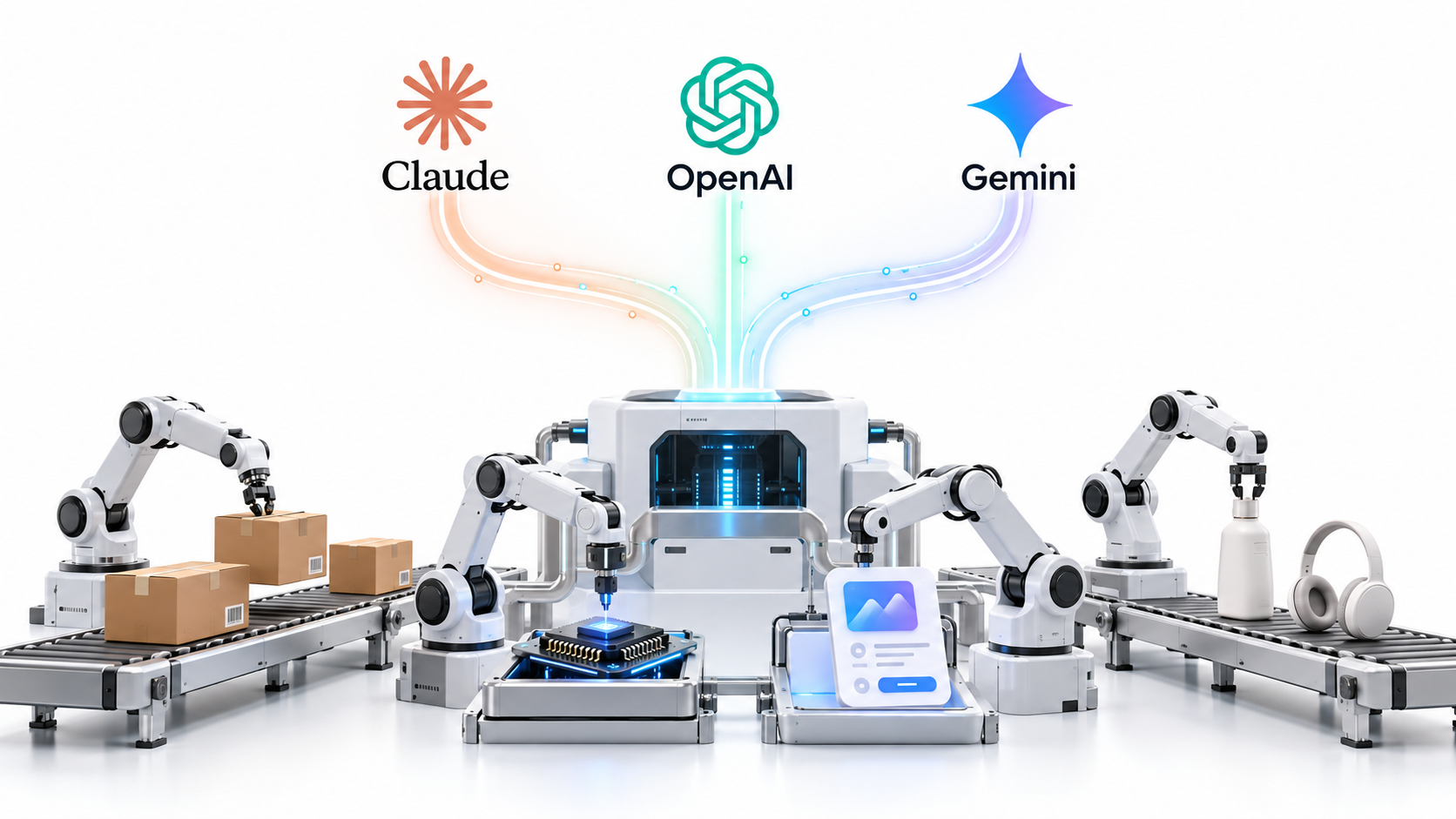
One question that keeps circulating back is, okay, we have this very capable artificial intelligence model. Yeah, it can replace most professions, especially desk jobs, but so what? Does it really translate into GDP growth?
One big question is, if the population is not growing at a much faster rate, why are we even outputting more? Don’t we already have enough?
All good questions. Let’s investigate that phenomenon.
What Is GDP and How Is It Calculated?
First of all, what is GDP, and how is it calculated?
For people without an economics background, GDP stands for Gross Domestic Product, and it measures the value of goods and services produced within a country. It is one of the main ways we measure how the economy of a country is doing in general.
The way we calculate GDP is:
GDP = Household Consumption + Investment + Government Spending + Net Exports
- Household consumption: Spending by households on goods and services.
- Investment: Investment in capital goods and inventories (factories, machinery, new houses, data centers, etc.).
- Government spending: Spending on goods, services, and infrastructure (roads, schools, unfortunately wars, etc.).
- Net exports: You subtract imports from exports of the country.
It is a pretty simple concept, definitely not rocket science. In order for GDP to grow, one of these variables has to grow as well, or all of them have to grow.
So the government can just start spending extraordinary amounts of money, go into a deficit, and GDP can grow.
What we also have is nominal GDP growth and real GDP growth. If the government decided to do that, some of the nominal growth could simply come from purely inflation. That’s why we look at real GDP growth instead of just nominal GDP, because real GDP is adjusted for inflation.
Real GDP growth in the USA in 2025 was around 2.3%.
So how is AI going to cause massive GDP growth, especially in developed countries where demand for goods and services is not necessarily scarce? There is enough food, and in many cases, we don’t necessarily have an availability problem. It is more of a distribution problem.
Accelerated Inventions
One way we can have much faster GDP growth is through accelerated inventions, and that is so hard to predict.
We can’t predict inventions since they are something that does not exist yet.
If you had asked me two weeks ago whether a regular-looking car would start doing backflips in the air and flying over cars, I would not have believed you. Today, I have a different opinion.
Now we are talking about creating new ways of transportation. Where does it lead? I don’t know, but it is creating a new category.
What if AI starts to treat deadly diseases and increases our lifespan significantly? That also creates increased demand for products and services.
New services can arise that we don’t currently have. Maybe in 20 years, you order something online and it flies to you in minutes.
But all of these are very unpredictable.
When Prices Drop to Almost Zero
One thing that is most likely going to happen is that general manufacturing and production costs should drop dramatically, potentially to almost zero, if robots and systems are doing everything.
When prices drop so dramatically, you do have significant growth in consumption as well. But it could be the case that, in nominal terms, GDP actually shrinks because everything becomes really cheap, even while real output grows.
We are almost there when it comes to software.
Software had some of the highest upfront costs years ago. Development costs were unprecedented, but we are reaching a point where software development could become almost zero cost.
When that happens, it means we are moving towards an abundance of everything at a very low cost.
Once that happens, it means measuring GDP the way we measure it today becomes much less relevant as a measure of how well people are actually living.
Maybe in the midterm, the USA and China will capture a lot of value economically, but in the end, it will spread worldwide.
Okay, then we can all afford everything, everybody is happy, and a beautiful life is ahead.
The Problem With Wealth Inequality
One potential issue I see is that wealth inequality could grow massively.
Meaning everybody’s basic needs would be fulfilled, and people would be content because, to be honest, average humans don’t need that much for living.
Me coming from an ex-Soviet country, everybody was not equal during communist times everybod was just poor. Even if you looked at the corrupt individuals during communist times who had more, there were limits to what they could get out of it.
They could not go sit VIP at a Queen concert or fly to Ibiza on a private jet. They just probably had gold spoons and knives hidden somewhere so the KGB would not catch them.
In order to fulfill the basic needs of people, it is not that difficult. Give them a home, food, a bit of money to travel and entertain themselves, and I think most people would be content.
That then becomes the problem.
There could be small groups of people who are really capturing 90% of the economic gains, and only 10% is distributed.
People would not even know and probably would not even fight for it since they would not see the point. Because they are fed, clothed, sheltered, and entertained.
It could turn into a modern-day Truman Show or modern-day consented slavery.