Mean Reversion in the Stock Market
Unsual gains are ususally followed by unusual losses
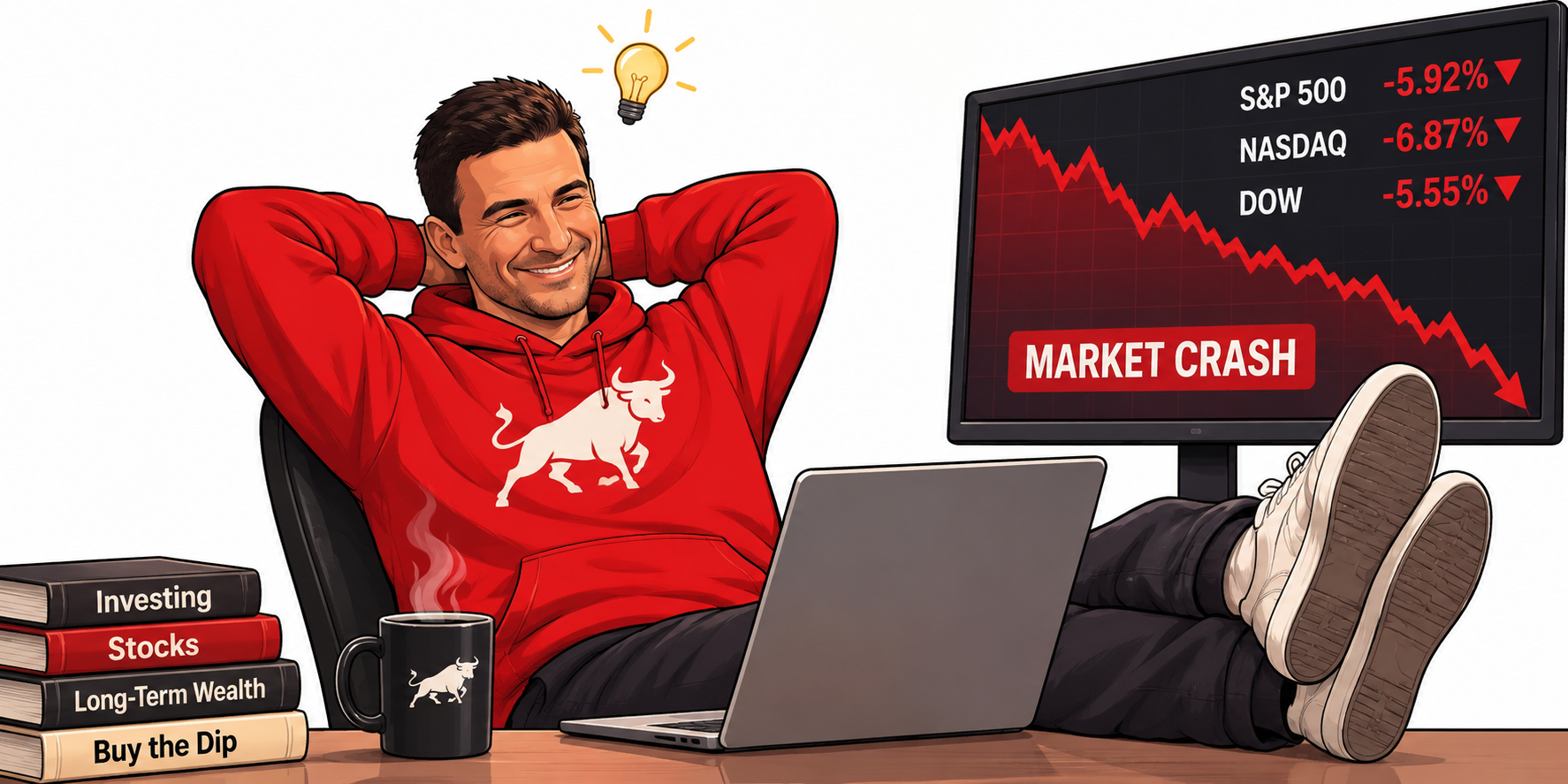
I am pretty sure all of you guys who are invested in the stock market have seen your portfolios lose significant value last week.
If your portfolio was not affected at all, either you are back from the future, like in that movie where the guy finds the sports book results and travels through time to bet on those sports events to make money (I forgot the guy’s name), or you are buying very niche stocks that have negative beta, so you don’t care about the market drop.
All of the above is very unlikely, so we most likely all lost value. But I have good news and bad news.
The bad news is that we will lose more value in the future. But the good news is that this is completely normal, and nothing unusual is going on.
Unusual Gains Will Be Followed by Unusual Losses
The gains we saw after the COVID period in the stock market were very unusual. From March 2020 to the all-time high in November, the S&P 500 grew around 250%. That is around 22% yearly growth, which is absolutely not normal.
Average historical growth is close to 10%. Okay, yeah, we had some recovery growth after COVID, but even if you include that, you are still in the 20% range.
If we have sharp gains, we can also have sharp losses.
Sharp gains usually happen in two ways. One is when some major breakthrough happens. Lets take medical field. Johnson & Johnson invents a new revolutionary drug, patents it, and then we see this massive rocket ship-like growth in the stock because all investors expect this will generate a lot of money for Johnson & Johnson.
But in six months, we hear the news that AstraZeneca has developed a different drug that tackles the same issue and treats the same disease. Suddenly, Johnson & Johnson’s stock enters correction mode and drops to lower levels.
It does not mean all gains will be wiped out, but instead of a 20% gain, maybe at the end we have a 5% gain.
The major breakthrough actually did happen, and it is called AI.
Basically, we invented a separate intelligence that supposedly can have capabilities to be smart enough to code, treat diseases, and automate 99% of the workforce. Of course, there would be hype.
Now it’s time to say, “Oh, we are almost reaching this superintelligence point. It’s very nice, but economically, we don’t really see these massive gains. Maybe let’s be more cautious.”
Which totally makes sense. People sell off, prices drop, and it’s a very healthy correction. And it will happen a lot in the future because we humans jump to conclusions right away.
We have discussed what we would spend the millions on if we won the lottery without even owning a lottery ticket.
So all of this is normal.
This is Niko’s casual explanation, but we actually do have a mathematical concept around that idea in finance.
It is called mean reversion.
Mean Reversion Strategy
Mean reversion means that if a price moves really far away from its historical average, it might return to its mean.
The market, in general, has an upward drift. Prices go up and down, but they usually stabilize around an average. The historical upward drift we have measured so far is around 10% a year on average.
Mean reversion does not always happen, right? Stocks can follow an upward trend, negative external effects can drop prices even further, and the mean itself can change.
But the whole idea is that if you look at the broader market and not a single stock, you experience volatility, then it stabilizes at some level. Then you experience volatility again, and then it stabilizes again.
Why Historically Can We Have More Than 10% Returns?
If you look at long-term historical performance, stock returns very closely follow earnings growth and dividend growth of companies.
Unless we have this massive surge from AI, where earnings grow at unprecedented rates for a long period of time across the whole S&P 500, it is difficult to sustain returns significantly above historical averages. Also, there are currently no signs of an unprecedented increase in economic output, so my expectations for a surge in earnings are pretty low, especially in the near future.
What people forget is that 10% is average growth, not growth every single year.
So after having 250% gains in the last six years, don’t be shocked if the stock market drops 30% in the next year or two, just to revert back to a more normal, justified valuation.
So if you are worried about the stock market, nothing unusual is going on. It’s always been like this.
It’s just that the extremes can be bigger on the downside because the gains on the upside were also pretty extreme.
What I usually think about is people who are nearing retirement. Personally, I don’t really care about volatility since I still have 40 years until retirement. But for people who are close to retiring, experiencing a sudden 30% drop in their portfolio must be really difficult to deal with mentally.