I Hate Communism, but I Find Ho Chi Minh Inspiring
Ho was built different
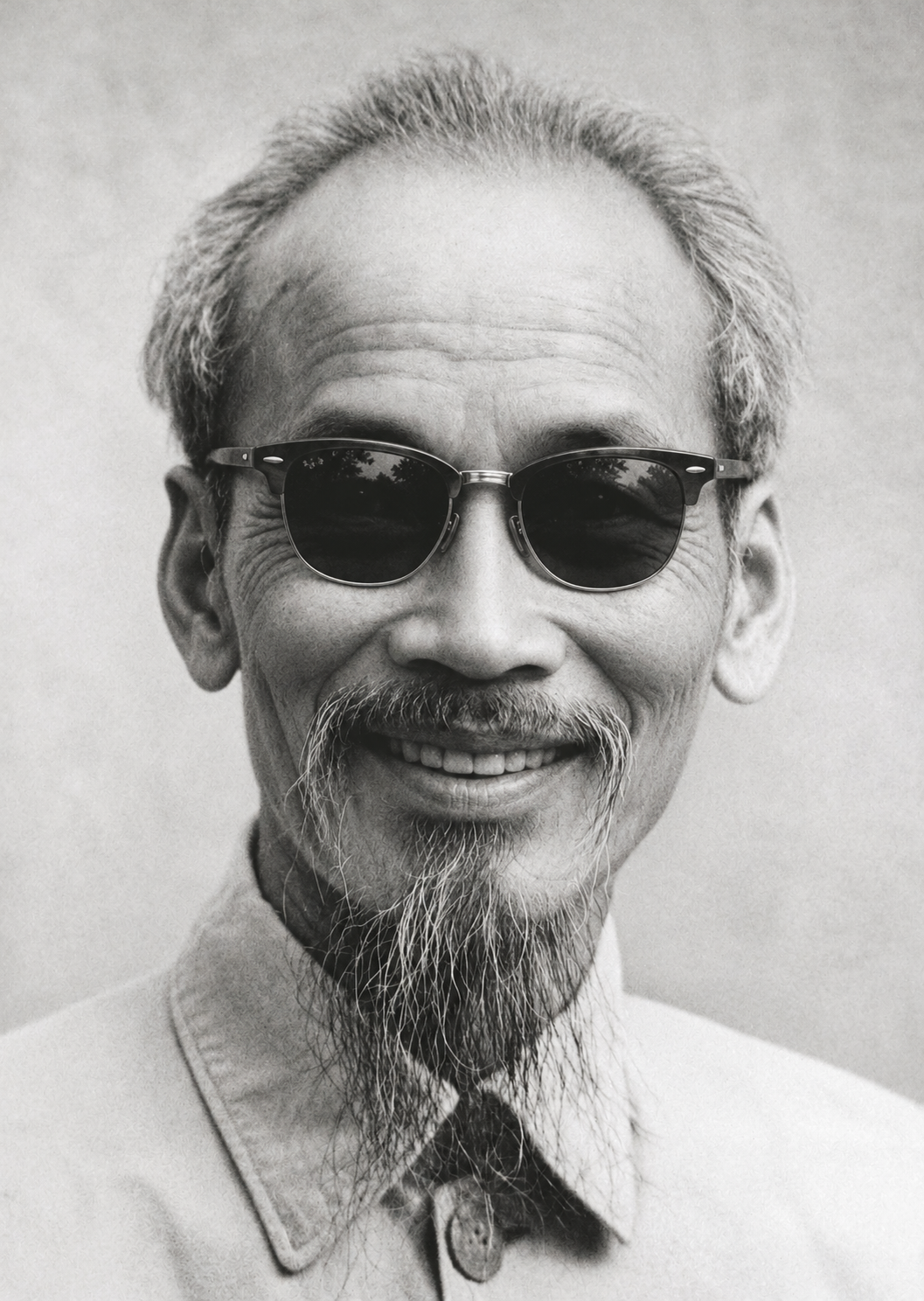
I come from a post-Soviet country. I grew up really hating communism. The only thing communism brought to Georgia was broken institutions, religious oppression, and an absolute slave mentality where humans obey everything the government says.
People who read the Communist Manifesto and say, “Oh, this is actually what we need,” are also kind of dangerous.
Freedom of choice is the most important God-given right that everybody should be able to practice. I would rather be homeless than have somebody give me shelter and food and become their slave forever. That was communism in a nutshell.
We Should Build Real-Life History Simulators
You know, I think things get lost in history, and I remember one business idea I had when I was a kid. We should have real-life simulators.
People who romanticize those times should be able to experience real-life communist everyday life.
They can be real proletarians. Wake up in the morning, read a censored newspaper about how amazing Stalin is, go out into the street and bow down to Mao Zedong’s statue. Wear plain uniforms in school, sing about great leaders, and live in Khrushchevkas.
If you were lucky, newlyweds who were actually able to receive housing might get something around 30 square meters for two people. Or maybe you would not get anything, so you would have to live with your parents in a two-room apartment.
We can build simulators for everything, like living in the Roman Empire for a week. I think it’s a fun idea. HMU if you want to give me money to do it.
But even though I hate communism, there is one leader I find particularly interesting from those times.
It’s Ho Chi Minh.
Who Was Ho Chi Minh?
Ho Chi Minh was the first president of the independent Vietnam.
I actually just found out that we almost have the same birthday. He was born on May 19th, and I was born on May 18th.
So, just to give you a short background, toward the end of the 19th century, the French were not that kind to that specific area of the map. They colonized the region between India and China, including what is today Vietnam, Laos, and Cambodia, and called it French Indochina.
Ho Chi Minh was born during the French Indochina period in Vietnam. His father worked in the imperial administration but was also an open critic of French colonialism.
Ho Chi Minh himself grew up watching unfair treatment from French colonialists toward Vietnamese people, and that shaped his whole life.
Then suddenly, when he turns 21, he leaves Vietnam.
He gets on a ship and goes to France. Then he travels all over the place. He visits different countries, including the United States, where he spends time in places like New York. He also spends time in London, and some accounts even suggest he visited South America.
He works in these countries, getting jobs as a cook and basically anything he could get.
Then he decides to return to France and gets interested in politics.
He actively starts advocating for Vietnamese rights and independence. He collects petitions and gets ignored.
In 1919, he sends a petition to the American government, hoping President Woodrow Wilson will support greater rights for Vietnamese people under French colonial rule.
He gets ignored.
Also, an interesting question: What would have happened if Wilson had responded? We could have gotten completely different influences in that region.
He keeps being active and publishes articles in newspapers. He becomes a founding member of the French Communist Party in 1920.
Communists notice him and get in touch with him.
Ho Chi Minh decides to travel to Moscow and studies at a communist university. He moves to China, gets involved in communist movements, moves to Hong Kong, where he gets arrested, and later spends more time in Moscow. He also travels through different European countries.
Basically, he is actively involved in politics with communists and makes absolutely high-tier connections all around the world.
So, he left Vietnam when he was 21 and returned after 30 years.
During these whole 30 years abroad, his main goal was to somehow help Vietnam become independent.
Thirty Years Fighting for One Goal
He establishes the Viet Minh movement in 1941 to fight against colonialism. By that time, Japan had already occupied Indochina.
Imagine this guy is an absolute communist, but he still reaches out to the Americans and gets military support to fight off the Japanese.
Once the Japanese are defeated in World War II, Vietnam declares independence right away in September 1945.
Then the First Indochina War starts, lasts many, many years, and finally ends with the defeat of the French in 1954.
One thing that really stuck in my mind was his true love for Vietnam.
The main idea was always to establish an independent Vietnam. It was also the case that he got more backing from the communists.
One of the quotes I remembered was:
“I am a communist but what is important to me now is the independence and the freedom of my country, not communism.”
If the USA had guaranteed him Vietnamese independence, I wonder whether he would have completely abandoned communism and prioritized freedom. We will never know.
He also emphasized a lot about the meaning of freedom. He said:
“Nothing is more precious than independence and freedom.”
I spoke so far very positively about him. He had his bad moments as well and definitely was not an angel. There were also very dark chapters under his leadership. During land reform thousands of people died in Vietnam. Even though he was this advocate of independence and freedom he oppressed opposition as well.
But some things about his life are very inspiring.
Like patience.
He waited for his moment. Thirty years outside of the country fighting for his ideas until he found the right timing to return.
Prioritizing his country over ideology is something I find particularly interesting.
Unfortunately, I can’t be proud of a fellow Georgian who never did it.
Stalin.
Stalin’s dream was never to see a flourishing, independent Georgia. He supported the Bolsheviks’ invasion of Georgia in 1921, which ended Georgia’s independence. His legacy includes repression and violence against Georgians.
Hundreds of thousands of Georgians later died fighting in the Soviet army during World War II because they were sent to the hottest war zones. One of the highest casualties in the world compared to the proportion of the army.
He organized terrorist acts, executed or exiled Georgian patriots.The only positive thing he did for Georgia was approving the construction of the Tbilisi Metro earlier than Soviet planning rules would normally allow. I remember reading somewhere that, in the Soviet Union, a city was supposed to have at least 1 million residents to qualify for a metro. Tbilisi had only around 600,000 people at the time, but Stalin approved the construction anyway. So at least we got a metro out of him.
Even though I hate communism, there are a lot of things I find inspiring in Ho Chi Minh’s life.
Besides traveling the whole world, dude also spoke 6 languages.
Main Takeaways
Patience and persistence are the two most important characteristics to achieve any goal in life.
You can be the smartest guy in the world, the most talented, the best-looking, but if you lack patience and persistence in life, you are not going very far.