Google’s Data Center Spending Looks Scary. I’m Still Bullish
SPVs dont scare me
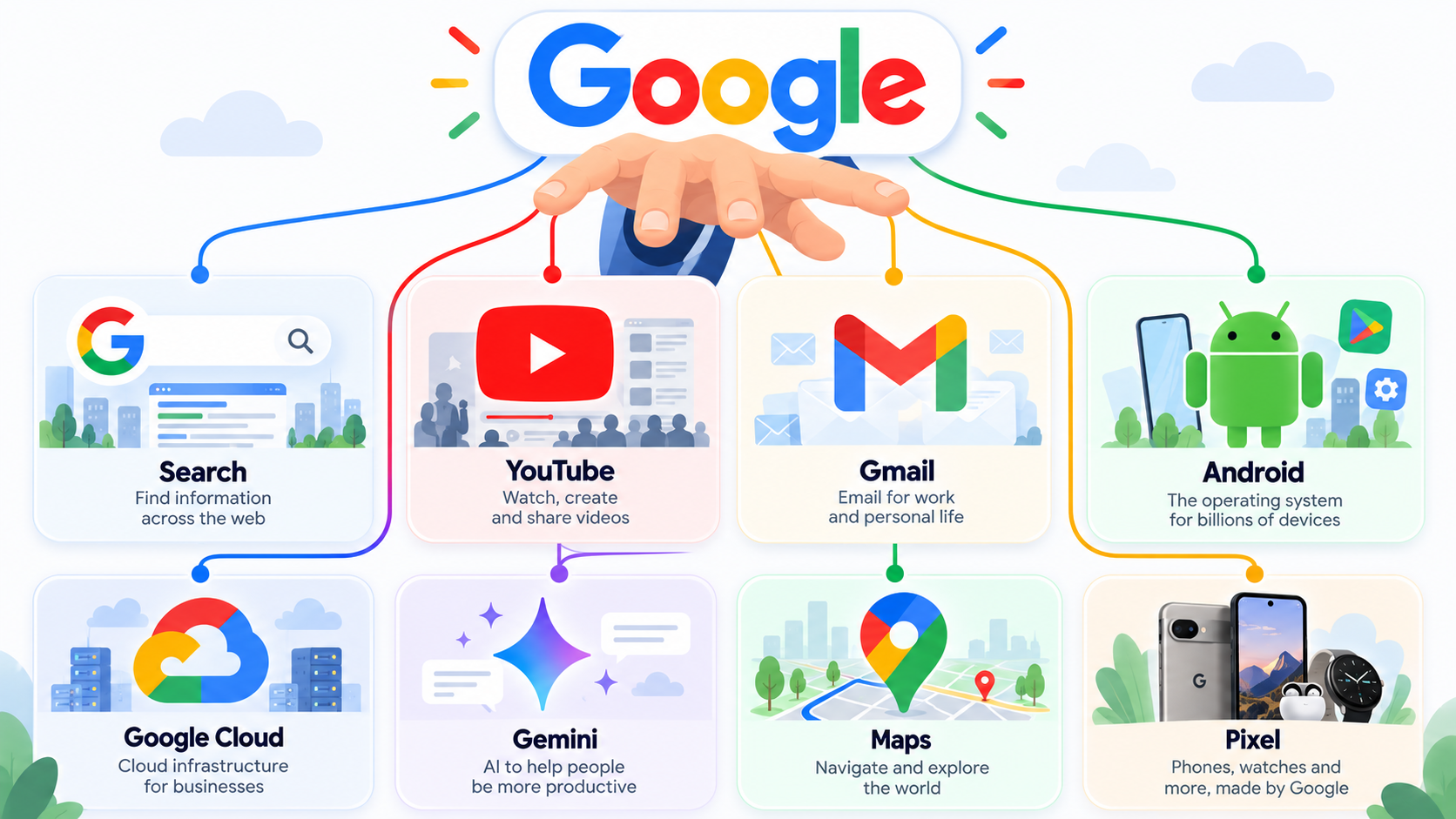
I am a really, really big believer in Google as a company and in its future value creation. Basically, you can call me a Google fanboy.
I don’t watch anything other than YouTube, for example. I don’t have Netflix or any kind of subscription. If I want to watch a movie or TV show that is not on YouTube, I buy it on YouTube or rent it. I use Gemini. I was peer-pressured into owning an iPhone, but the next phone I own is going to be a Google Pixel. I have never had another personal email other than Gmail.
So you can really see how much I am completely involved in the Google ecosystem.
I talk about Google a lot as an investment vehicle as well, so the other day one of my colleagues told me, “Yeah, it’s an amazing company, but aren’t you worried that their major AI computing development happens under SPVs and they don’t really show up on the balance sheet?”
Then I thought, what a great topic to write about.
The short answer to whether I am worried or not is absolutely no. But let’s do a deep dive into why.
First of All, What Is an SPV?
SPV stands for Special Purpose Vehicle, and it is a very common practice, especially in large corporations.
In a nutshell, large companies set up separate legal entities for a specific purpose, either to own a certain asset, isolate financial risk from the parent company, or raise capital. Basically, every large company does it in some form.
If an SPV fails, the effects on the parent company can be limited depending on how the structure and contracts are set up.
Google does the same thing. Some of its data center buildout involves SPV structuring.
So why am I not worried about this?
There are multiple reasons.
Anything that does not show up directly on the balance sheet does not automatically bother me because that does not mean it is hidden. There are a lot more things that show up in the financial reports that we can already see.
Let’s look at a simple hypothetical example.
Imagine Google opens an SPV for a data center. They contribute $1 billion as a direct contribution, and the rest of the capital is raised through various forms of debt. Google’s equity contributions towards the SPV have to be accounted for. Debt side yeah we dont see it in the balance sheet
But besides that, Alphabet already spent around $80.6 billion in capex during the first six months of 2026, driven mainly by investments in technical infrastructure. That spending is also directly reported.
Those are the direct contributions, but what happens with the SPV commitments? Are these reported?
Yes.
Under accounting standards, SPVs can qualify as Variable Interest Entities (VIE). Even though Google has variable interests in some of these entities, it is not considered the primary beneficiary when it does not control the activities that most significantly affect their economic performance. Those VIEs are therefore not consolidated, but Google’s exposure to them is still disclosed.
There are a couple of numbers we can focus on that are not directly on the balance sheet but are disclosed by the company.
As of June 30, 2026, Google had entered into $85.2 billion worth of future lease payments, primarily related to data centers, for leases that had not yet commenced and therefore were not yet recorded on the consolidated balance sheet.
The second number is $43.8 billion in credit derivative backstops. Google also disclosed another $7.6 billion in financial guarantees. Basically, if something goes wrong and the underlying parties cannot meet certain obligations, Google may have to step in under those guarantees or backstops.
These numbers might seem like a lot, and they are a lot, but keep in mind that we are talking about a company that reported $242.5 billion in cash, cash equivalents, and short-term marketable securities as of June 30, 2026. In the first six months of 2026, it also generated $84.9 billion in operating cash flow. So those numbers don’t really scare me by themselves.
One thing that can also give you some peace of mind is where the technical infrastructure capex is going. Around 60% goes toward servers, while roughly 40% goes toward data centers and networking equipment.
If everything goes south 40% of investment can be somewhat recoupable with various methods . In some of Google’s data center backstop agreements, the company even retains the right to assume leases for internal use or sublease them to third parties. 60% server side of staff is a little harder to liquidate.
There is no way in the world, in my opinion, that we end up with so many data centers that we cannot make use of them. Maybe we have enough capacity to drive down the cost of computing dramatically, but a world full of completely abandoned data centers is hard for me to imagine.
So, to my colleague’s question about whether the SPV setup scares me, absolutely not.
I would be more worried about companies that are AI-native, don’t have an existing successful business model, and are taking on billions of dollars of future commitments.
But there is one thing I am a bit worried about. Not necessarily worried, but it requires attention.
The $811 Billion Number
Google entered into $811 billion worth of purchase commitments and other contractual obligations as of June 30, 2026.
Before the current AI boom, at the end of 2021, that number was only $13.7 billion.
That is an absolutely enormous increase.
The $811 billion includes commitments primarily related to technical infrastructure and inventory through long-term supply agreements and open purchase orders, as well as content licenses and energy take-or-pay contracts. Of the total, $200.7 billion was classified as short-term.
It seems like a very alarming number, and this is where I think we actually have to pay attention.
We don’t know the exact structure of every single contract or how much flexibility Google has in each one. But we also should not simply assume that all of them can easily be renegotiated if demand slows down.
Alphabet disclosed $707 billion in expected future fixed or guaranteed commitments under long-term supply agreements, energy agreements, and content licenses with remaining terms greater than one year. The significant majority relates to long-term supply agreements. Some energy agreements also contain take-or-pay provisions and substantive termination fees.
So yes, this number deserves attention.
But to calm you down a bit, Google has already $513.9 billion in contracted Google Cloud revenue backlog, meaning a huge amount of future Cloud revenue is already under contract.
And if Google ends up with more computing capacity than the market needs, it still has another weapon. It can drive down the cost of computing and token prices aggressively. With its existing ecosystem, Cloud business, Search, YouTube, Android, Workspace, Gemini, and distribution, Google has far more ways to monetize cheap computing than a company whose entire business depends only on selling AI tokens.
There are things that are a little alarming and absolutely require attention, especially that $811 billion commitment number.
But overall, Google is on a super trajectory that not many companies can claim.